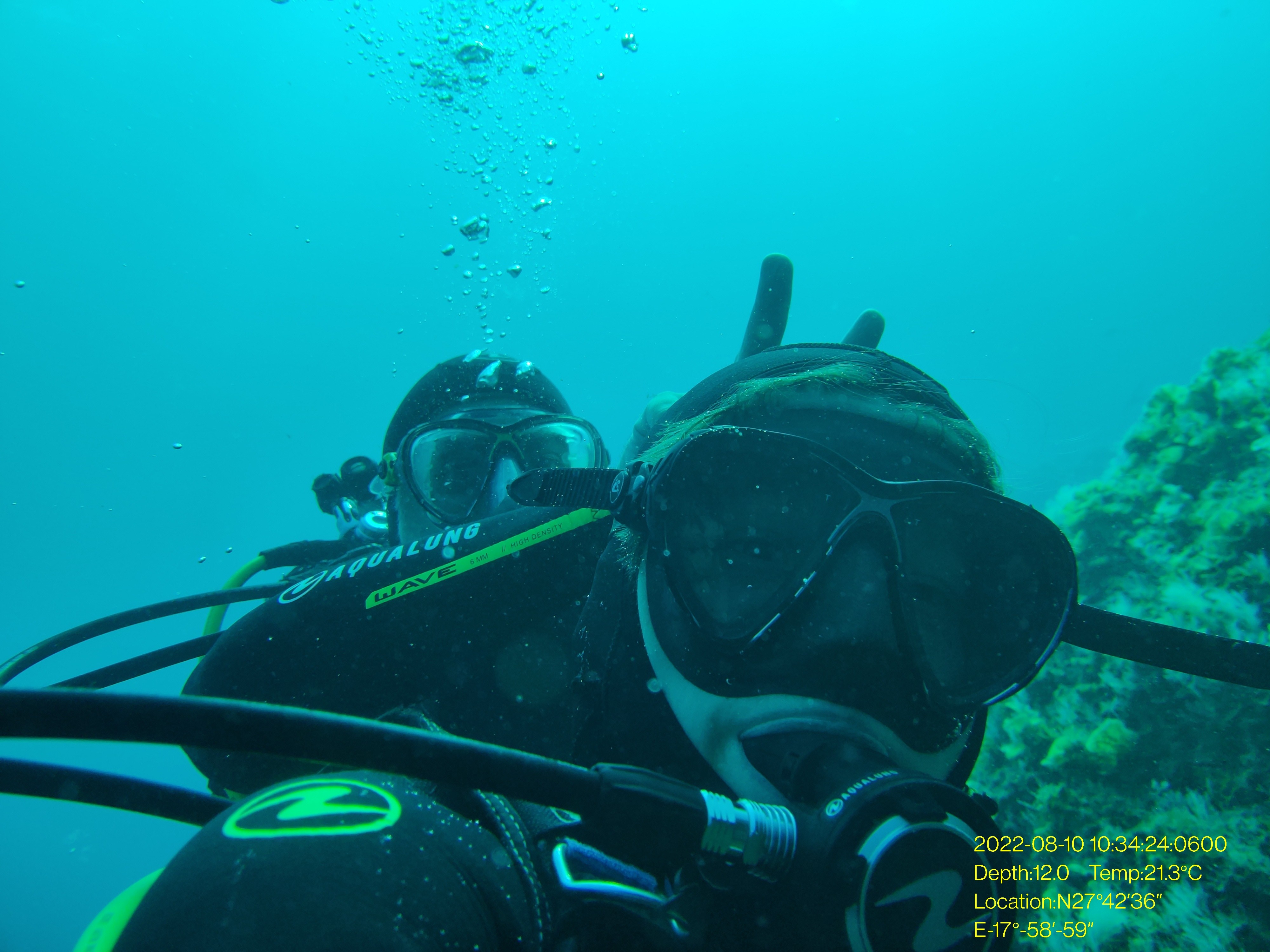
In this article I will present you the best pictures that I’ve taken while diving in Pico island and I will try to identify all the species visible on them so that you can have an idea of this place’s underwater biodiversity.
I dove 4 times in Pico. Since the water gets really deep really fast, you don’t need to dive from a boat because all the interesting things to see are literally a few meters from the shore. Personally I think diving from the shores can be more enjoyable as you don’t have to take the boat and thus transport your equipment from one vehicle to another.
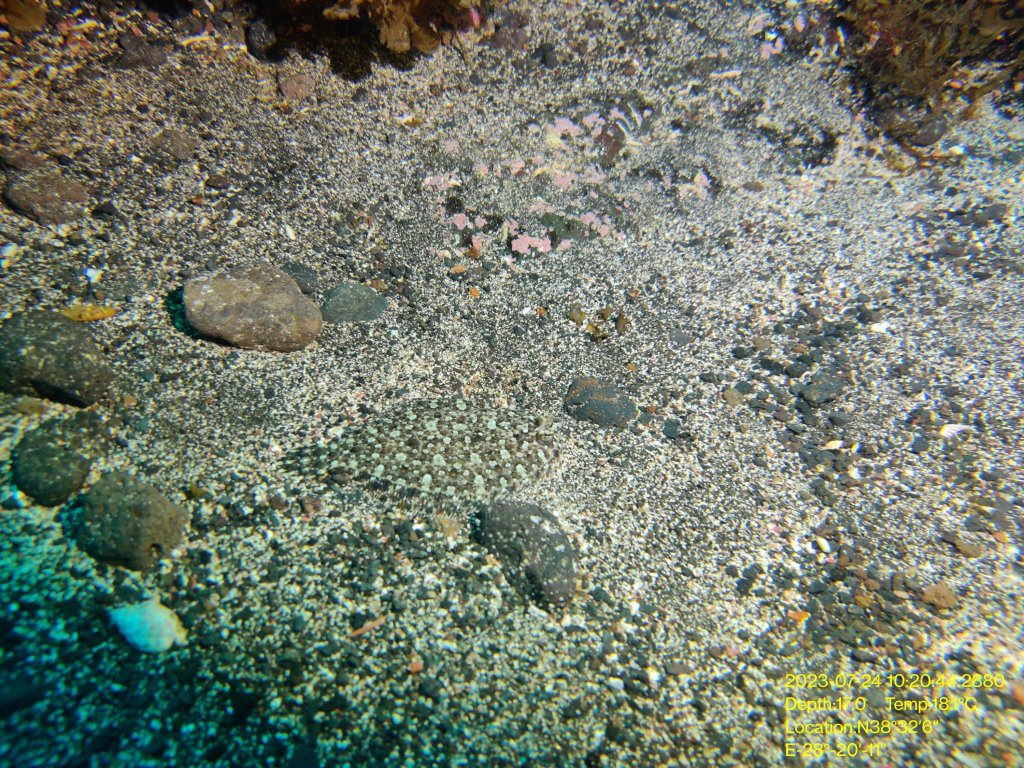
Let’s start with a fish that I saw only once. This Wide-eyed flounder – Bothus podas lays discreetly on the sand in the middle of the picture. This fish is at the top of the food chain. It eats shrimps, bivalves and worms.
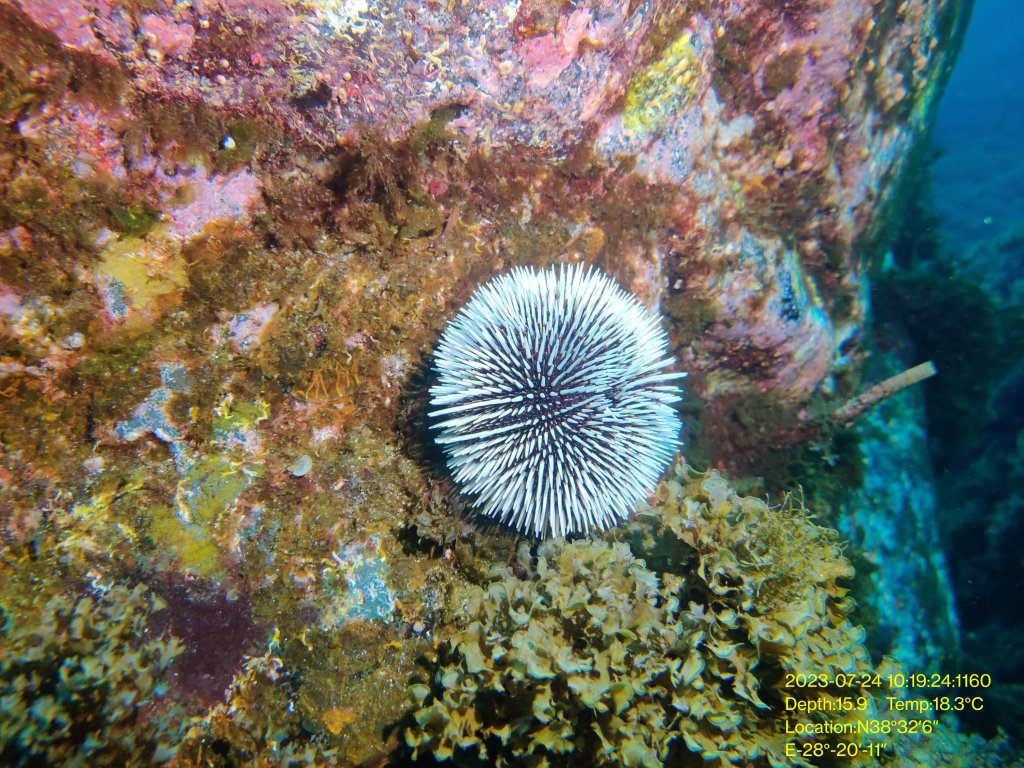
Right in the middle of this photograph you can see a Purple sea urchin – Paracentrotus lividus. This is a grazer echinoderm that is really commonly seen in these waters and that feeds on algae.
In the background you can see a Spiral tube worm – Sabella spallanzanii, and the algae that is under the sea urchin is called Zonaria – Zonaria.
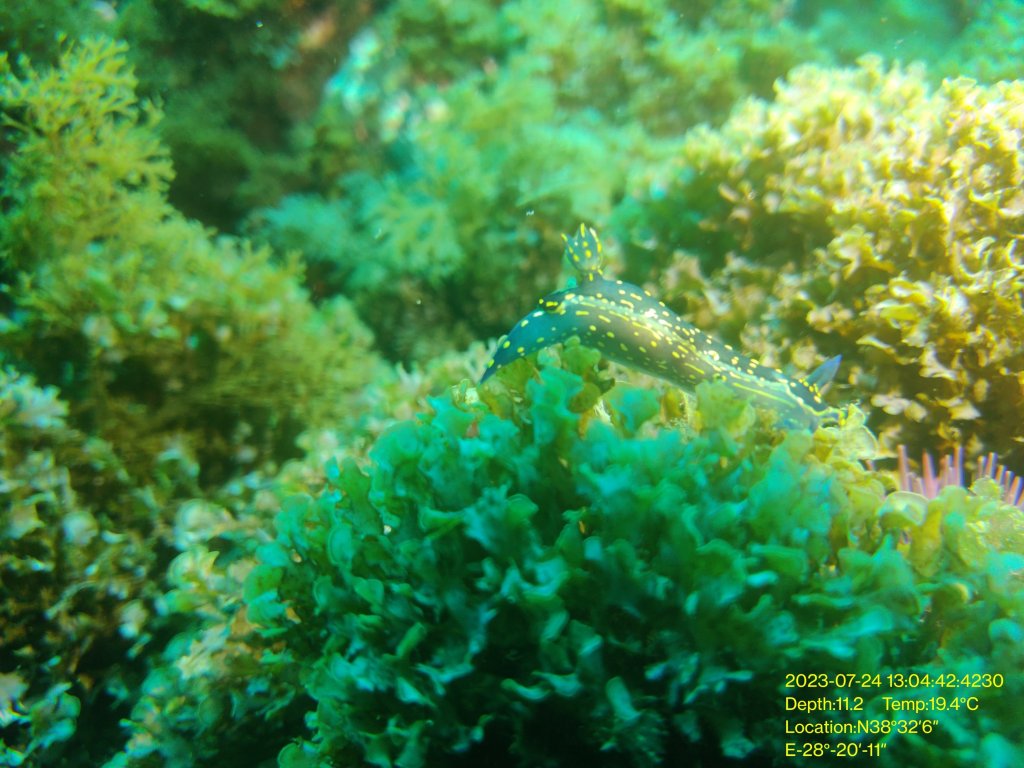
This is a nudibranch called Tricolor doris – Hyselodoris tricolor. It grows up to 5cm long and is not very common in these waters.
On its right, there are a few purple spikes that are visible. These can once again be a Purple sea urchin. The nudibranch itself is laying on a Zonaria bed.
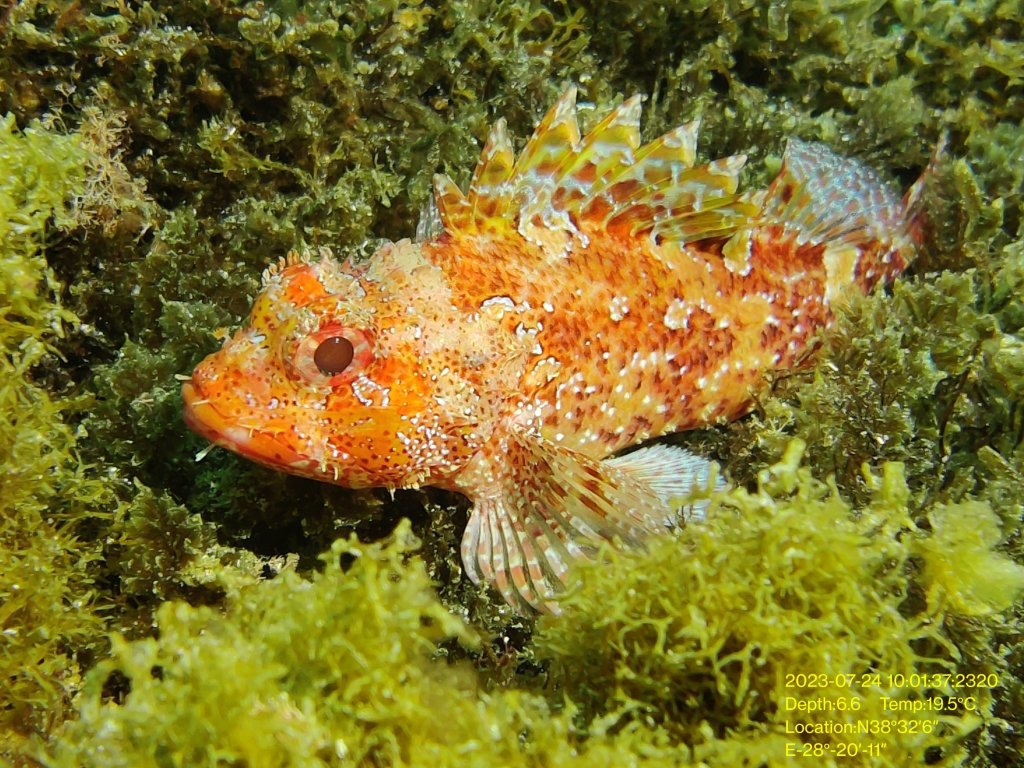
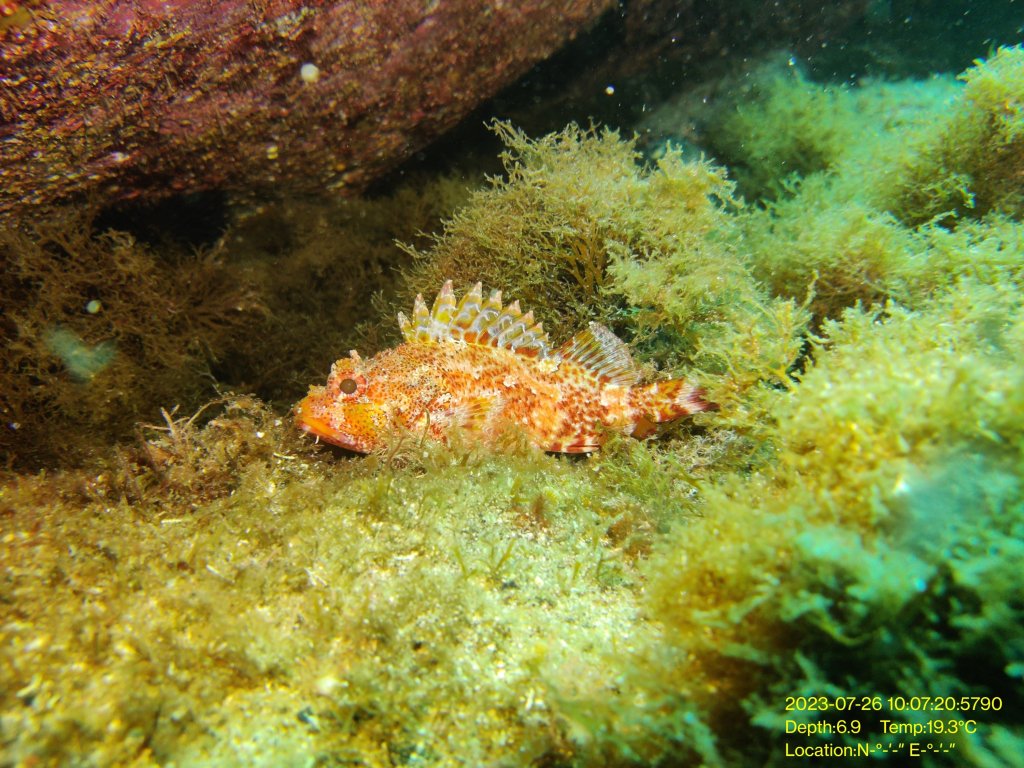
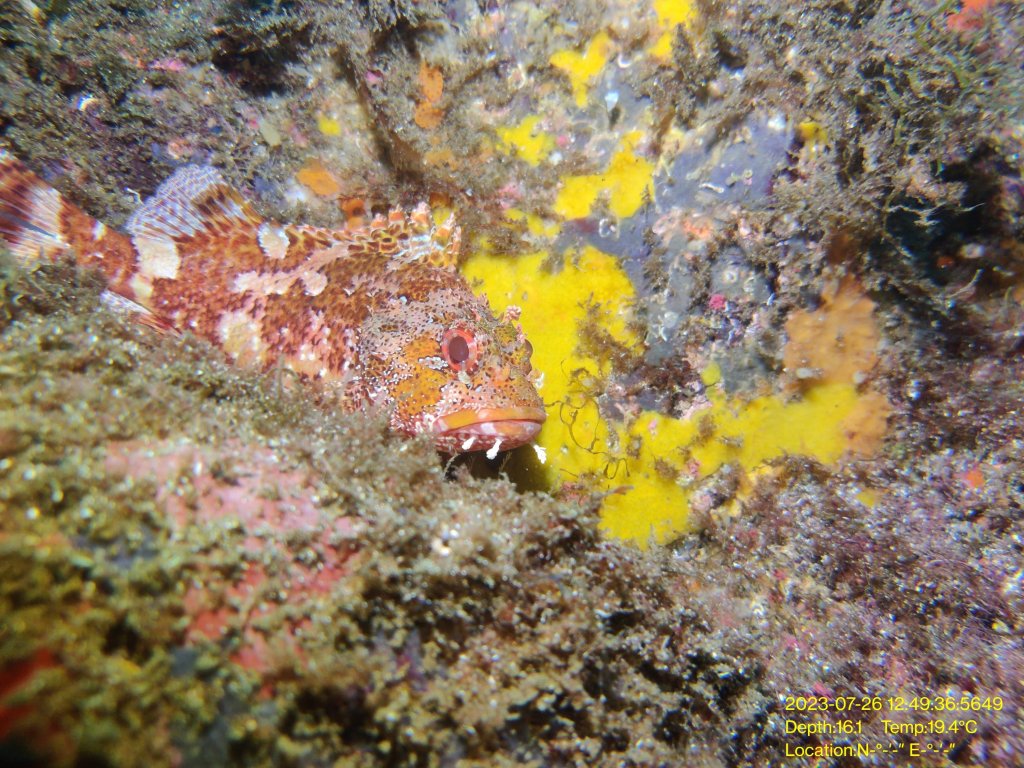
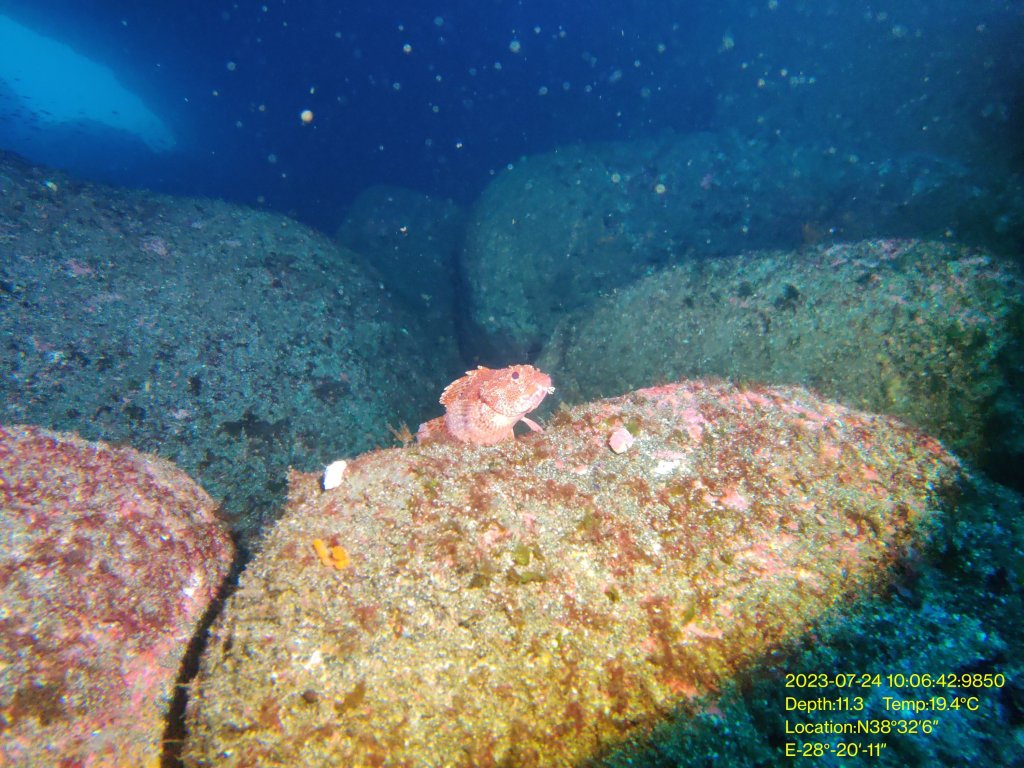
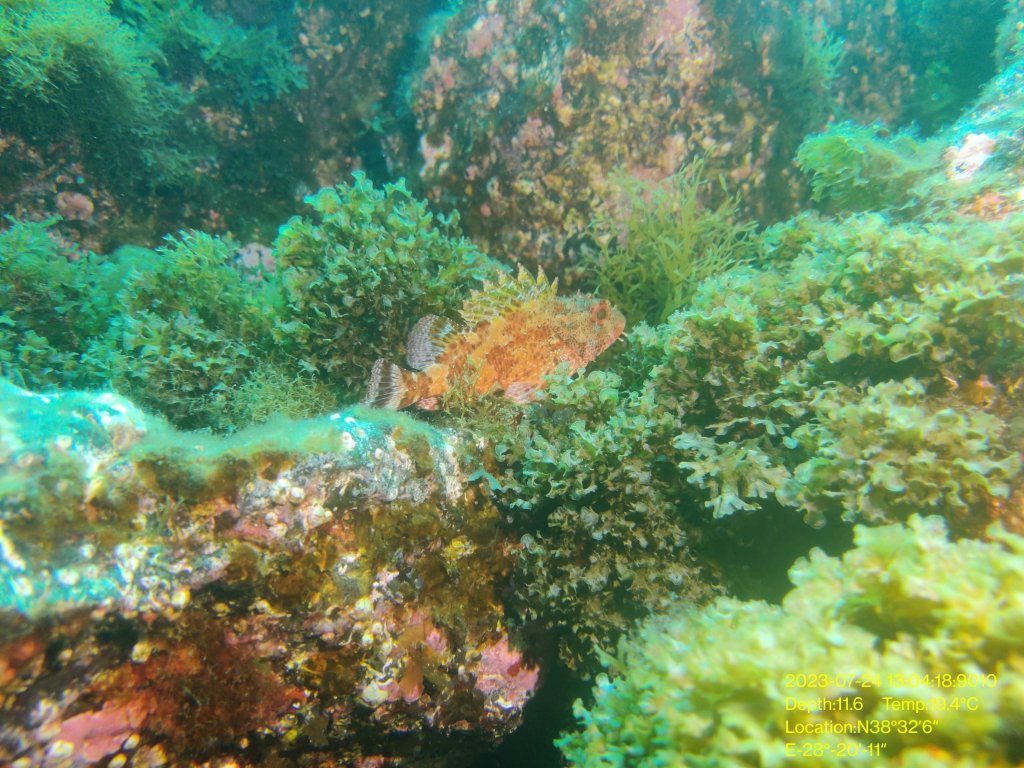
On all of these 5 pictures you can see Madeira Rockfish – Scorpena maderensis. This is a very common fish that lives on rocks, grows up to 15 cm and that is totally indifferent from your presence. Moreover, don’t step on them or touch them because their spikes are venomous. They are at the top of the food chain and eat other fish, sponges and tunicates.
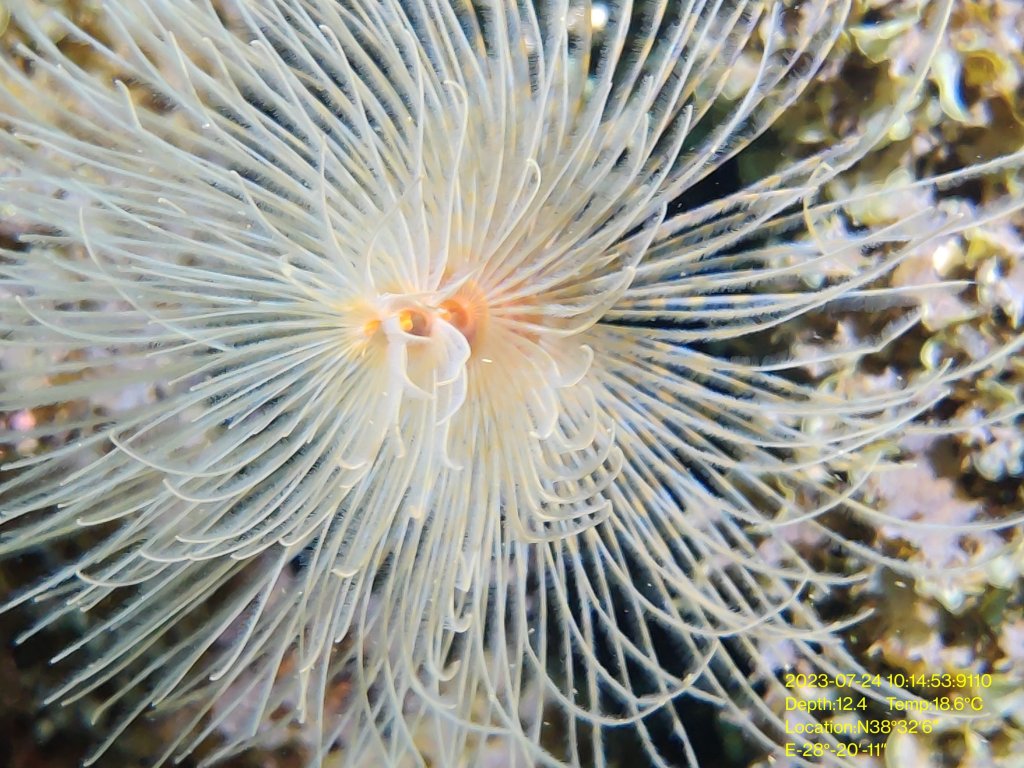
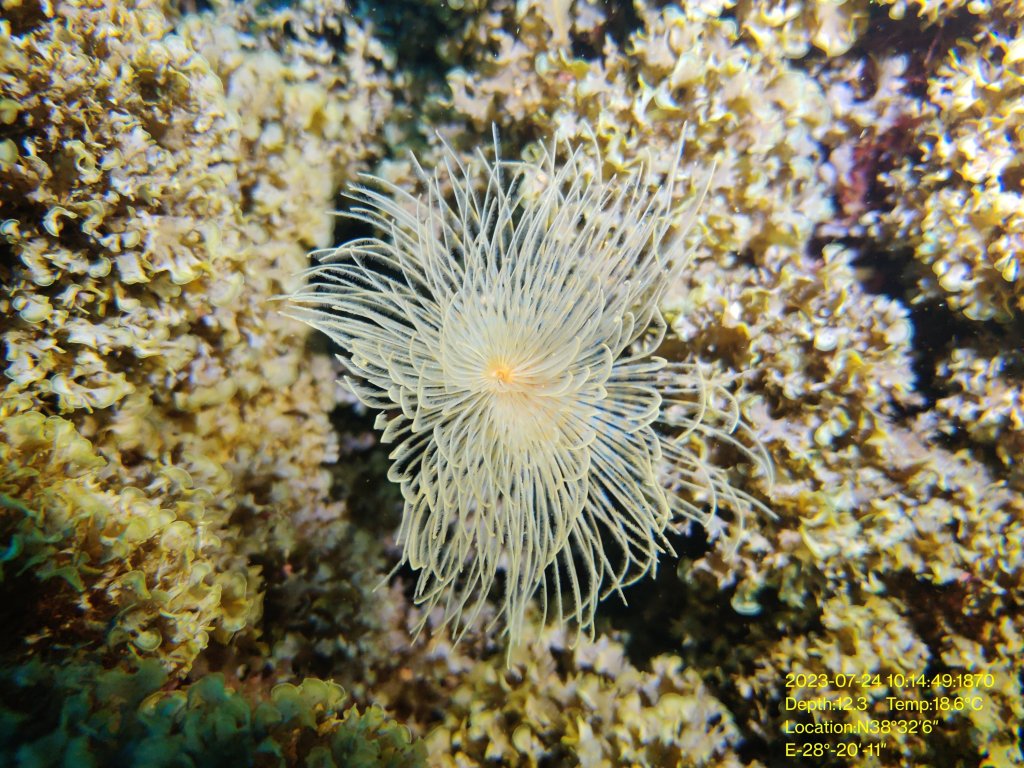
This is a Spiral tube-worm – Sabella spallanzanii, it can grow up to 40 cm long approximately. It is for me one of the most majestic living beings that I’ve seen underwater! It’s a work of art !
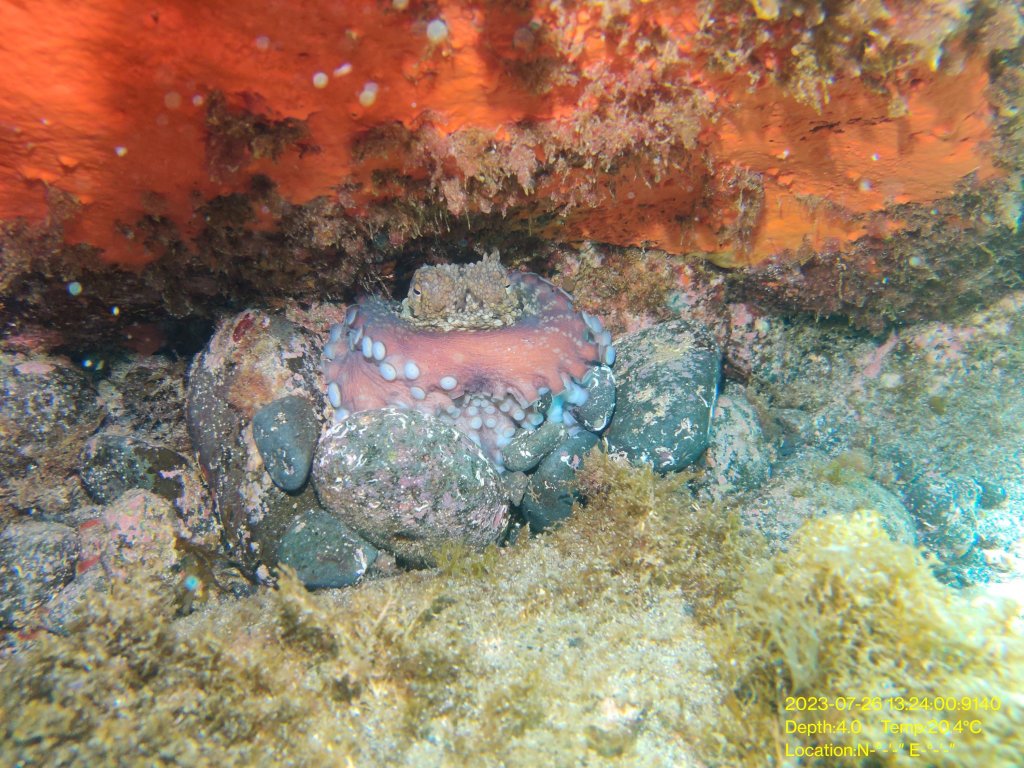
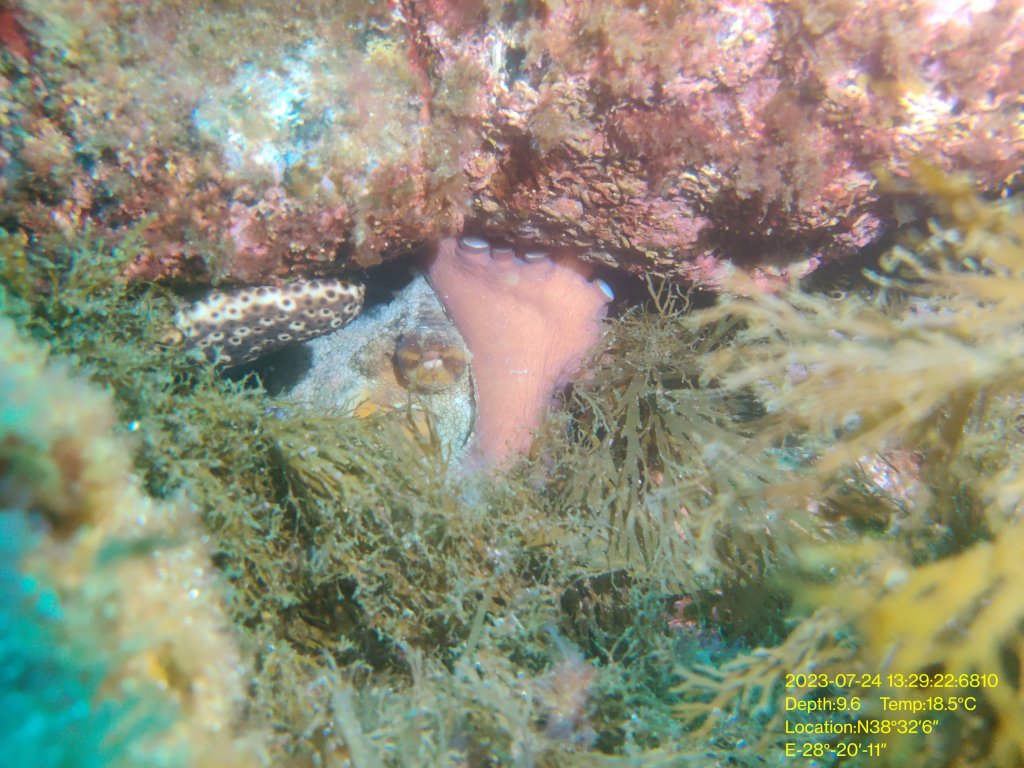
The Common octopus – Octopus vulgaris is a common specie that you can encounter in the Azores. It’s quite curious and has the ability to change its skin color depending on the color of the sea floor. The Common octopus is a predator that is at the top of the food chain, it hides in caves in the rocks during the day and hunts fish, shrimps and bivalves during the night.
On the left of the octopus on the second picture, there is a Sanctori sea cucumber – Holoturia sanctori.
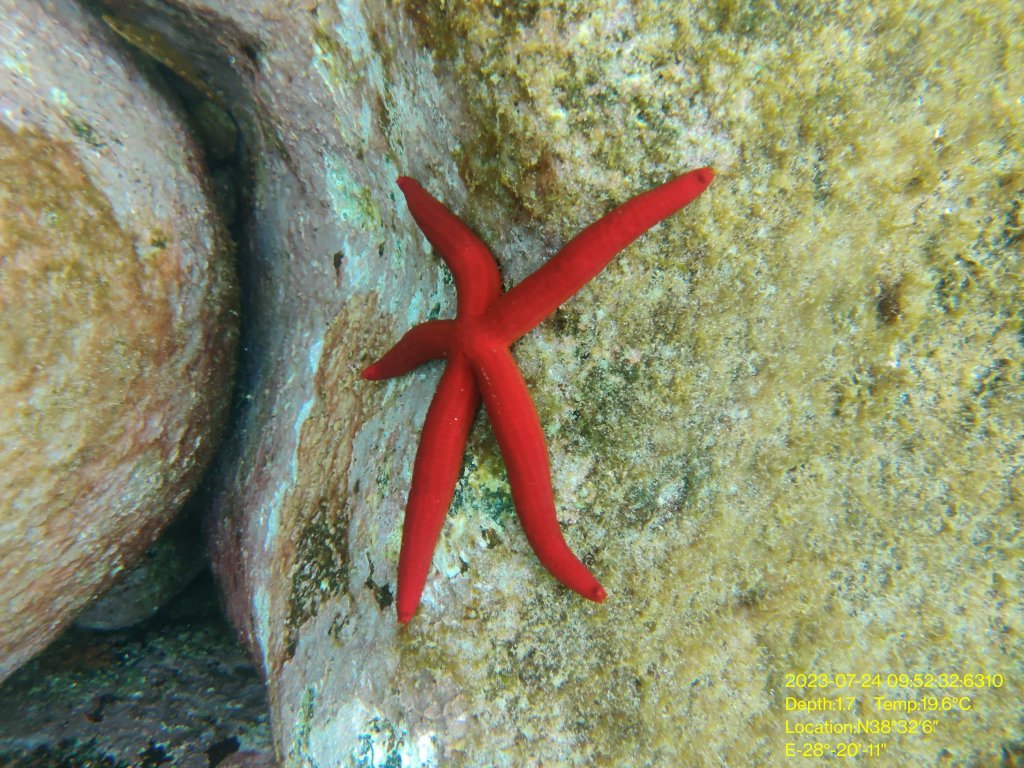
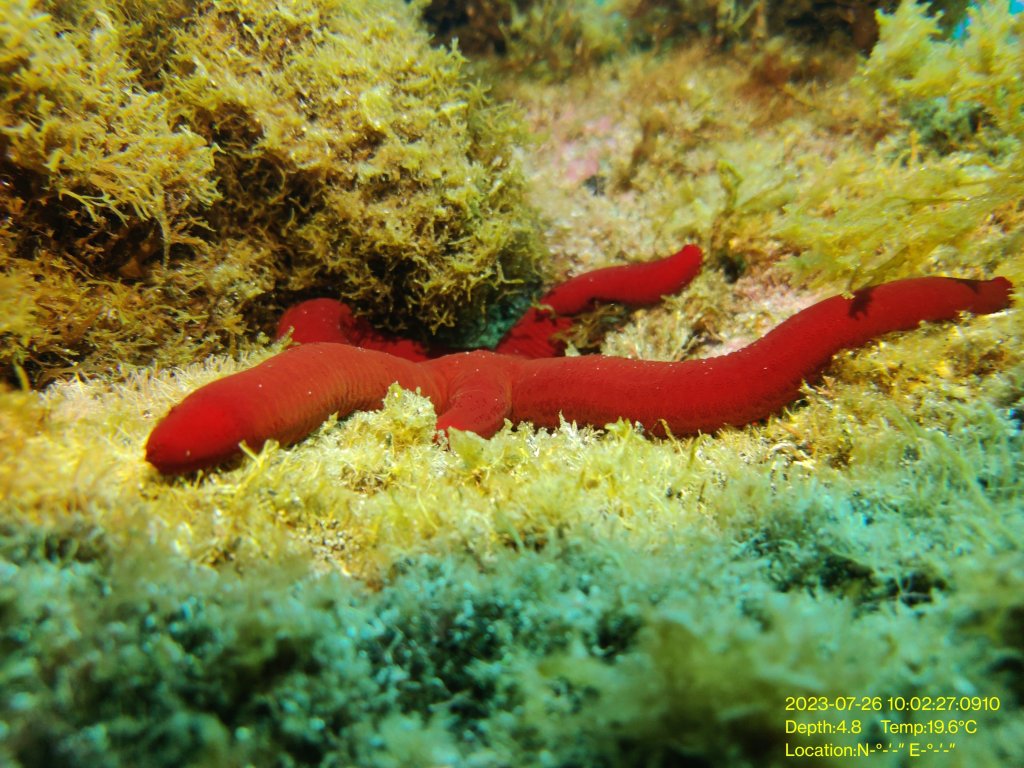
Here you can see a Red starfish – Echinaster sepositus. It is a quite common echinoderm that can be found between 1 and 250 meters deep.
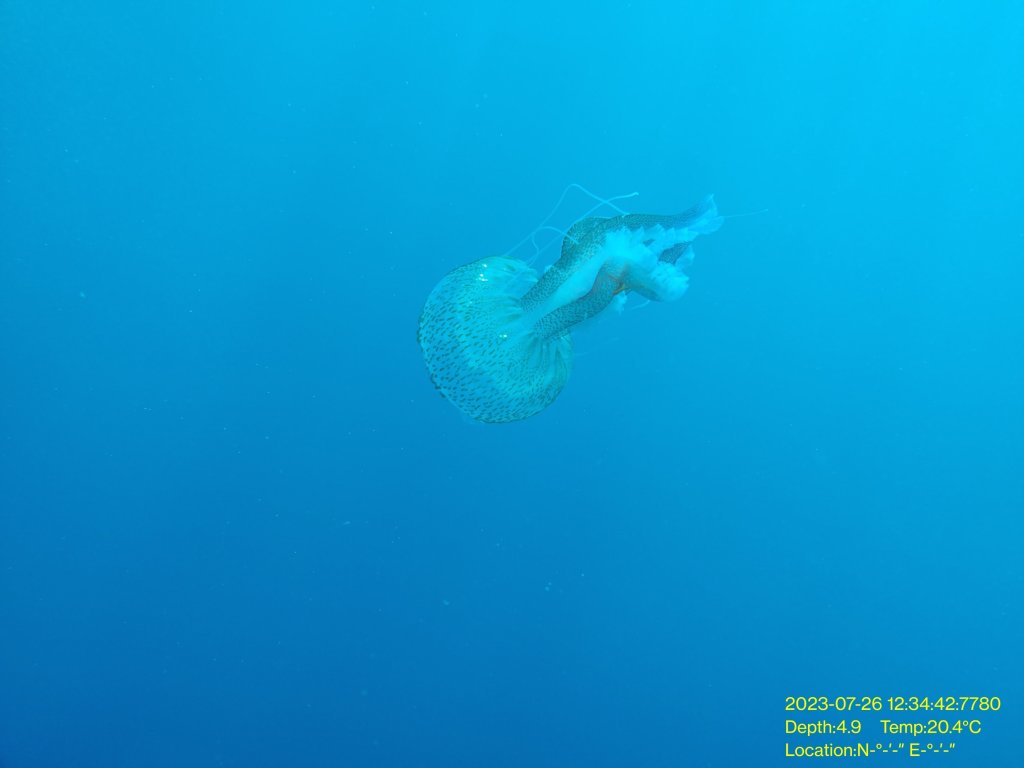
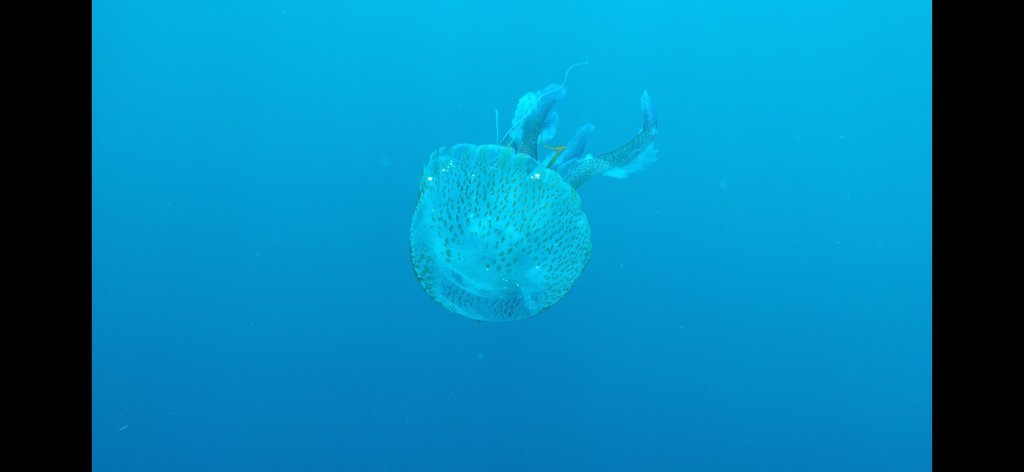
This is a Pink jellyfish – Pelagia noctiluca. It’s a common jellyfish that lives between the surface and 1400 meters deep, and that can cause you dangerous skin irritations if you touch them.
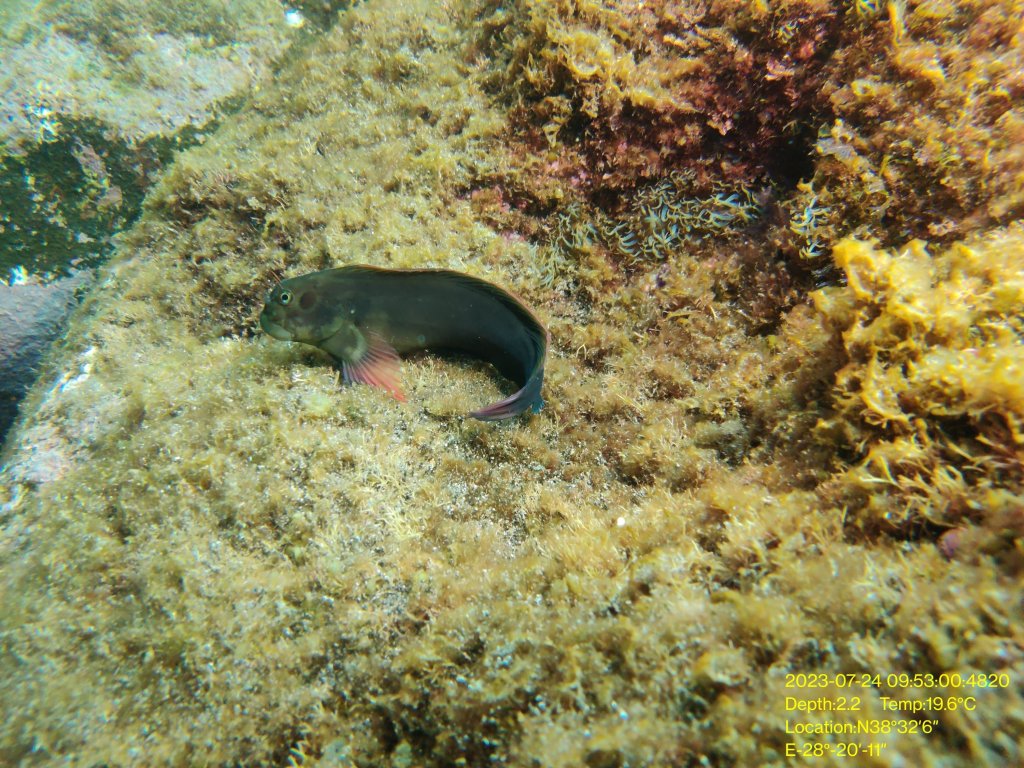
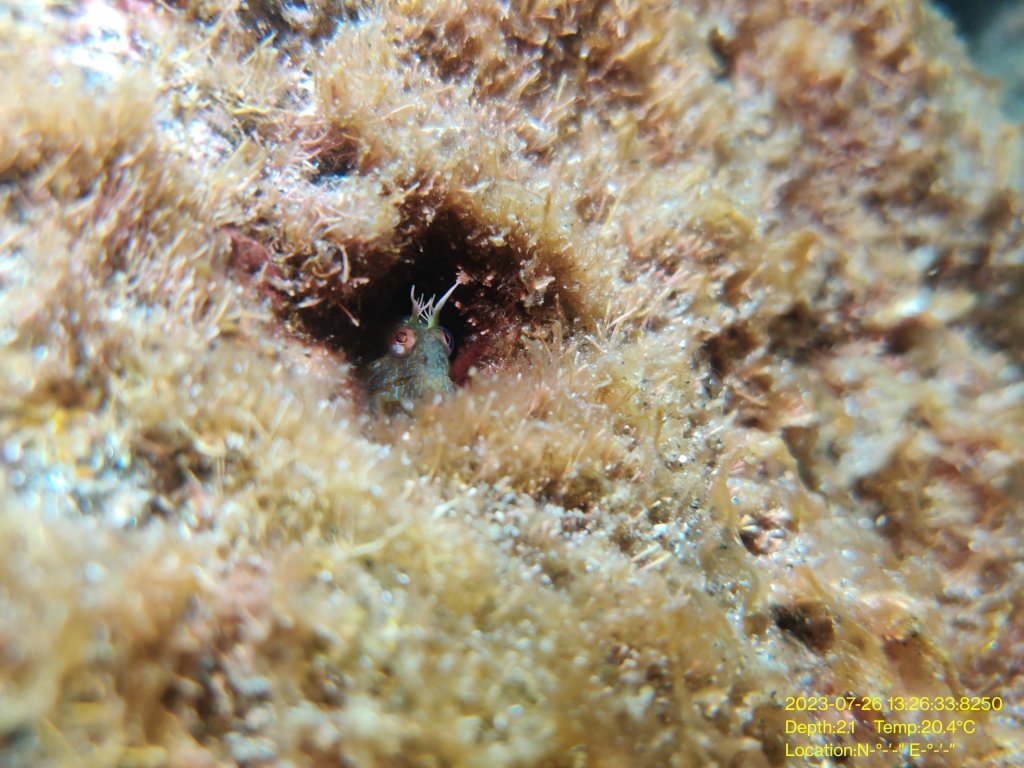
These are Redlip blennies – Ophioblennius atlanticus. They are quite aggressive, eat algae and live between the surface and 20 meters deep on sandy bottoms.
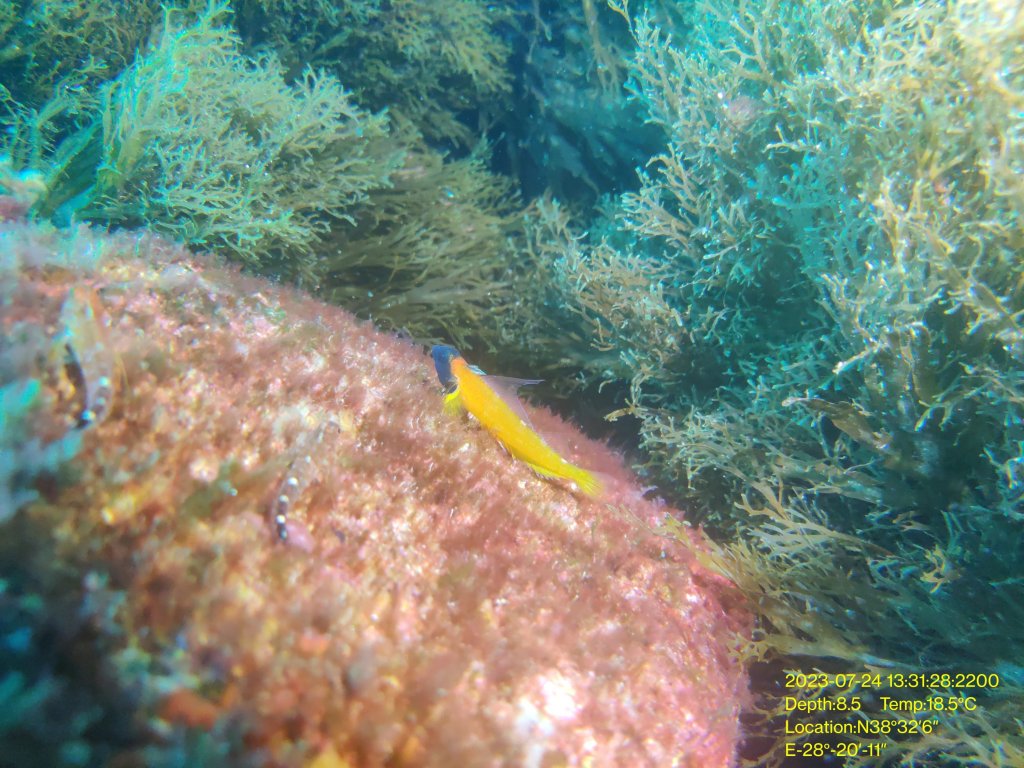
This Black-faced blenny – Tripterygion delaisi is really not aggressive compared to his pairs, the Redlip blennies. It usually lives hidden in the rocks between 3 and 40 meters deep and is at the top of the food chain. It eats sponges, worms and tunicates.
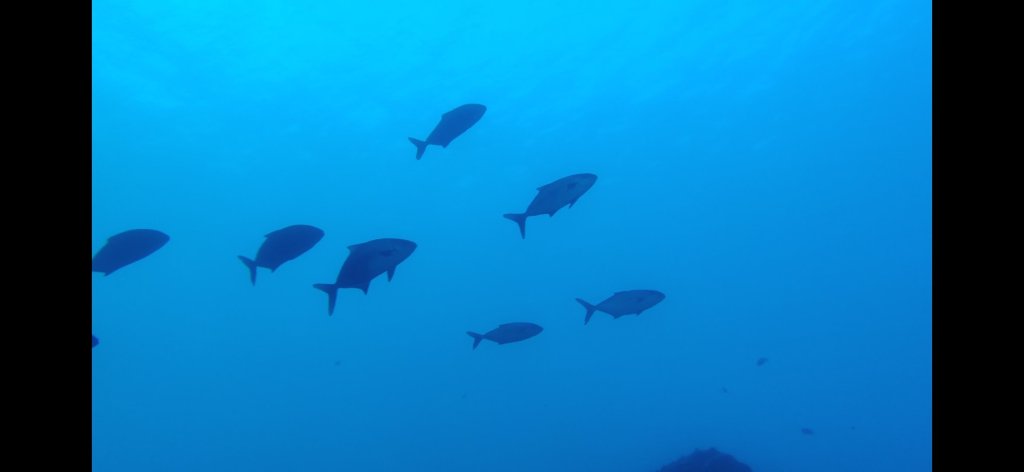
In this group of fish are White trevallies – Pseudocaranx dentex. These top predators eat plankton, sponges and tunicates and live in shoals between 10 and 200 meters deep.
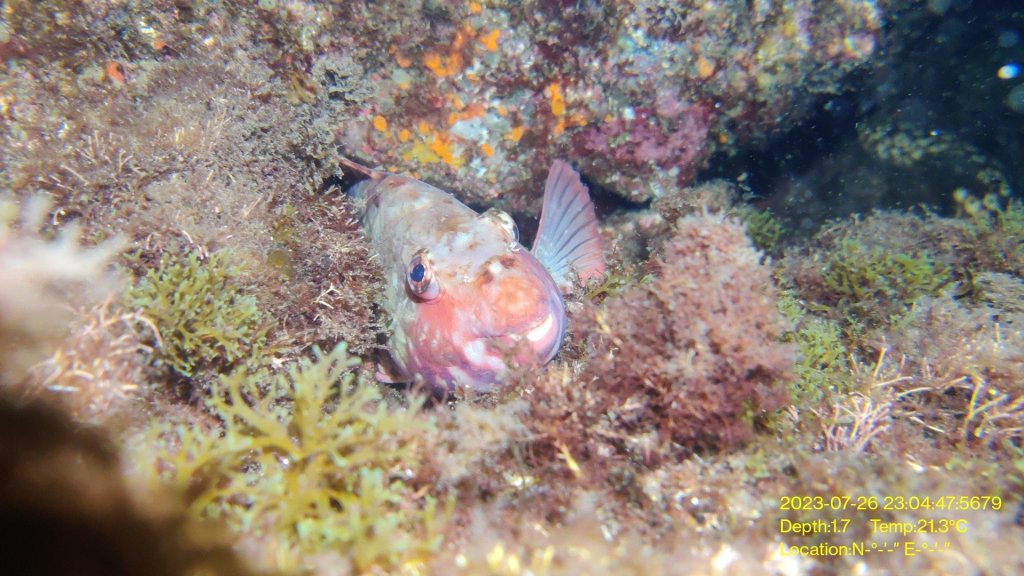
This is a night picture of a Parrotfish – Sparisoma cretense. They are vulnerable protogynous fish that live in groups between 3 and 50 meters deep and eat algae, sponges and worms.
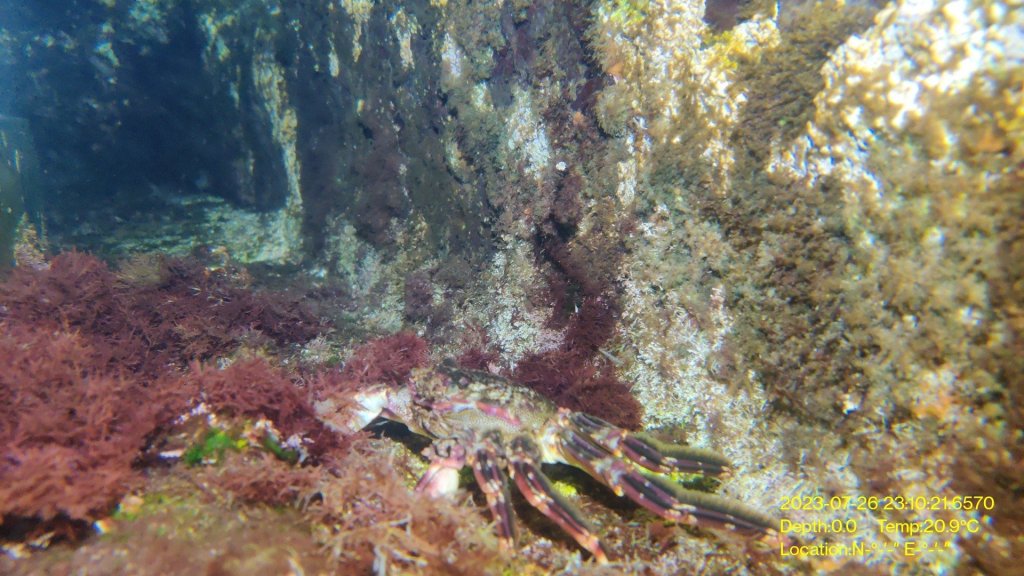
On this last picture, that was also taken during the night, you can see a quite common Rock crab – Graspus adscensionis, that lives between the surface and 5 meters deep in the rocks and that can grow up to 8 cm long.
To recap, in Pico’s waters I saw :
- Wide-eyed flounder – Bothus podas
- Purple sea urchin – Paracentrotus lividus
- Spiral tube worm – Sabella spallanzanii
- Zonaria – Zonaria
- Tricolor doris – Hyselodoris tricolor
- Madeira Rockfish – Scorpena maderensis
- Common octopus – Octopus vulgaris
- Sanctori sea cucumber – Holoturia sanctori
- Red starfish – Echinaster sepositus
- Pink jellyfish – Pelagia noctiluca
- Redlip blennies – Ophioblennius atlanticus
- Black-faced blenny – Tripterygion delaisi
- Parrotfish – Sparisoma cretense
- Rock crab – Graspus adscensionis
These are my favorite photographs of Pico’s underwater life. I tried my best with the identification and hope it’s correct !
You can find the rest the underwater POVs of my Azorean dives on my blog !
 Lucas Vahlas' Blog