Before starting to talk about technical things, let’s just talk about where is El Hierro…
Where is EL HIERRO?
El Hierro is a small spanish island situated in the Atlantic ocean near Occidental Sahara. It is the smallest island of all the Canary islands with a surface of only 268.71 km², and is the southest point of Europe. Other Canary Islands like La Palma or La Gomera are very close to El Hierro. La Palma is 67 km going to the north and La Gomera is 61 km going to the East. Tenerife, one of the two capitals of this archipelago, is only 2OO km away from our island. You can go to El Hierro by boat from Tenerife or by plane.
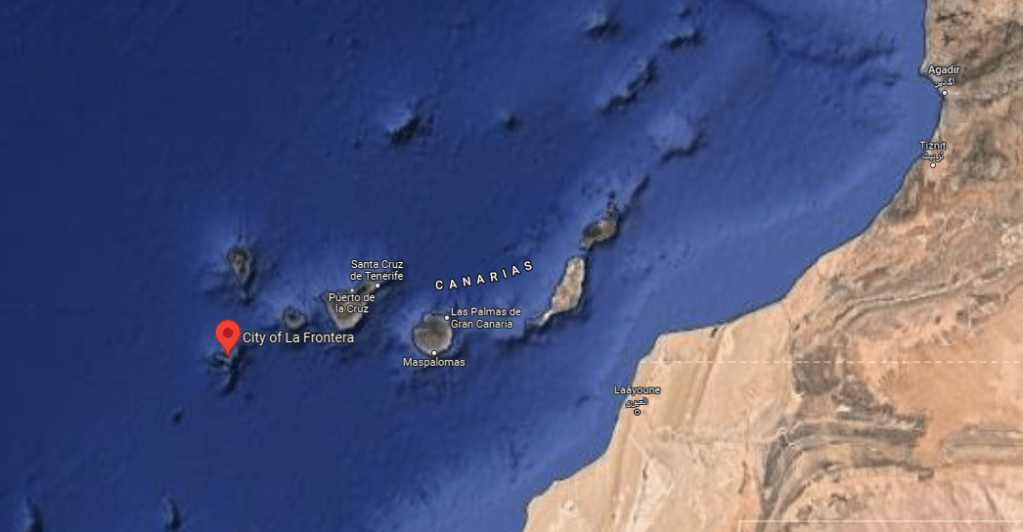
On this picture, we can see El Hierro’s location in the archipelago of the Canary Islands.
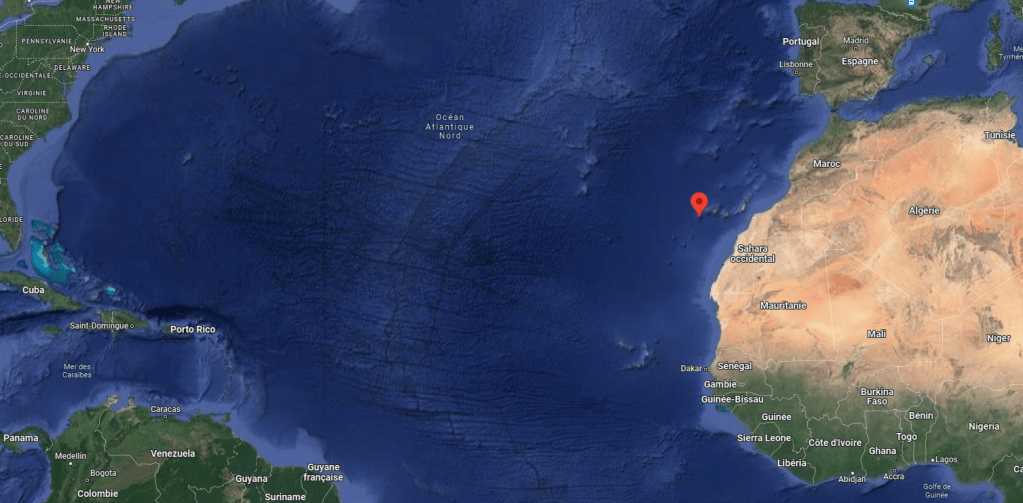
And, on this one we can situate this island in the atlantic ocean.
El Hierro is full of biodiversity. On this island, almost untouched by the humans, and not designed for massive tourism like the other Canary Islands, on which only live a few thousand people, you can understand what it really means to combine life and respect of the environnement.
As said in the title of this article, there is real marine reserve around this island. It is called “Mar de las calmas” which means “calm sea”. It has it’s name from the fact that there, the water is very calm with no waves due to the mountains that stop the wind. It is very spectacular to see because the big ocean waves drastically stop, forming a perfect line going straight to the horizon. This area is protected since 1996, and since 2011, this reserve is a special conservation zone placed between the “Natura 2000” reserves, so that all the species that live there are protected from human activites.
The reserve is situated around a small fishermen’s village called “La Restinga”. It goes in the direction of ” faro de orchilla” by simply following the coast.
There you can find a lot different marine species due to the fact that the water goes very deep very fast – we quickly get to 2 km deep simply going a few hundred meters from the coast. This let’s pelagic species to come, such as manta rays, whales, dolphins, sharks, tunas, and others. But, the calm waters let the “coast fishes” develop. The combination of these two parameters leads to an environment where the biodiversity is very rich and you can literally see everything if you have a bit of chance.
In the reserve there are different areas with different restrictions. There is an integral reserve where it is forbidden to do everything, you can’t even stop there. This allows the marine species to have a place where no one will come and pertubate their life. Around this area, the restrictions are a bit cooler. You can fish and scuba dive but only following some special rules. You can only scuba dive on some special dive sites that are marked by buoys, on each of them can park only one boat, and on this boat only 12 people are allowed, including the dive masters and scuba instructors. You can stay for one hour on a diving site and dive to 40m deep only. In this area fishing is permitted but with only 3 technics that are traditional there at El Hierro. These 3 technics have a minimal impact on the underwater ecosystems and allow you to choose what you catch and reduce ecosystem destruction.
All these little restrictions made for the marine reserve are real witnesses of what is possible to do, to live respecting the environment that is all around us.
Other places with a very rich biodiversity should take El Hierro as an example and do the same thing to protect their seas.
HERE ARE SOME PICTURES OF THE UNDERWATER LIFE IN THE RESERVE
I am now going to show you some of my pictures that I have taken diving in the reserve. Unfortunately, there is no picture of a manta ray because when we saw it, my camera had run out of battery… 😥
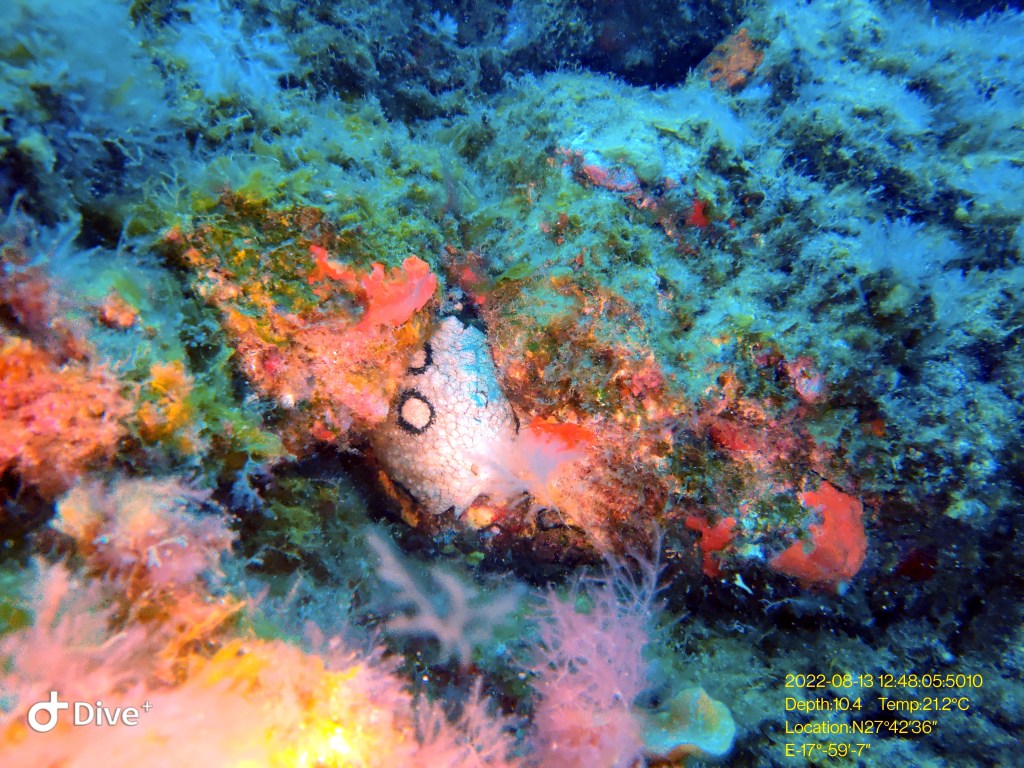
On this picture, you can see a nudibranch
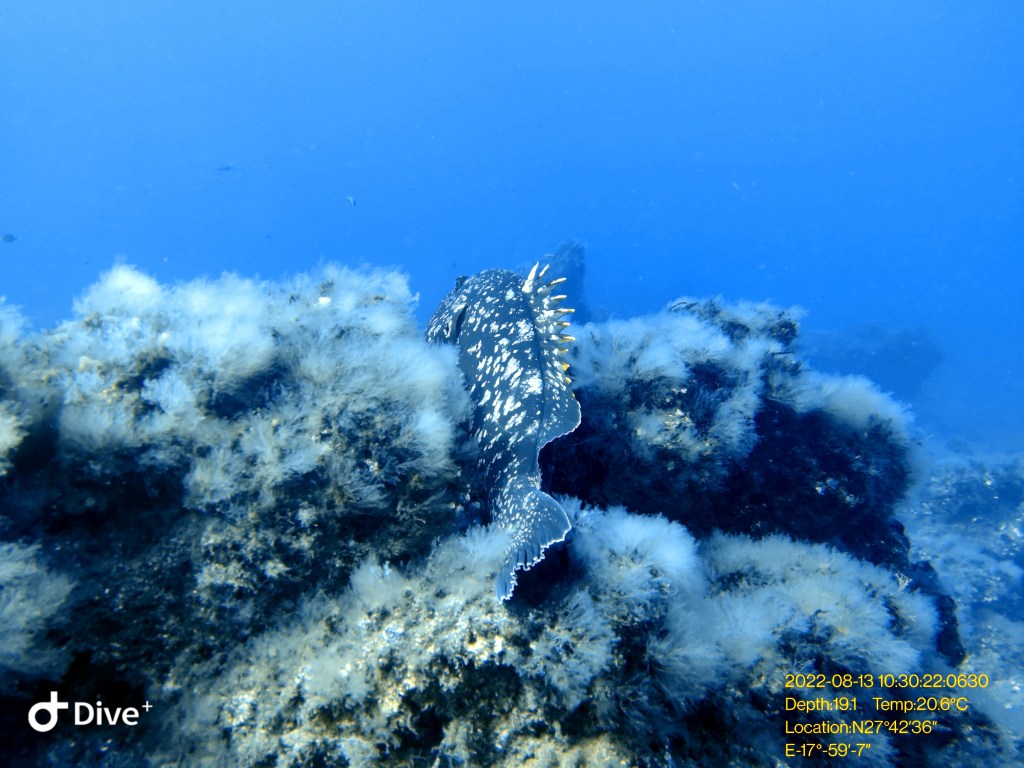
This is a grouper hidding in the rocks.
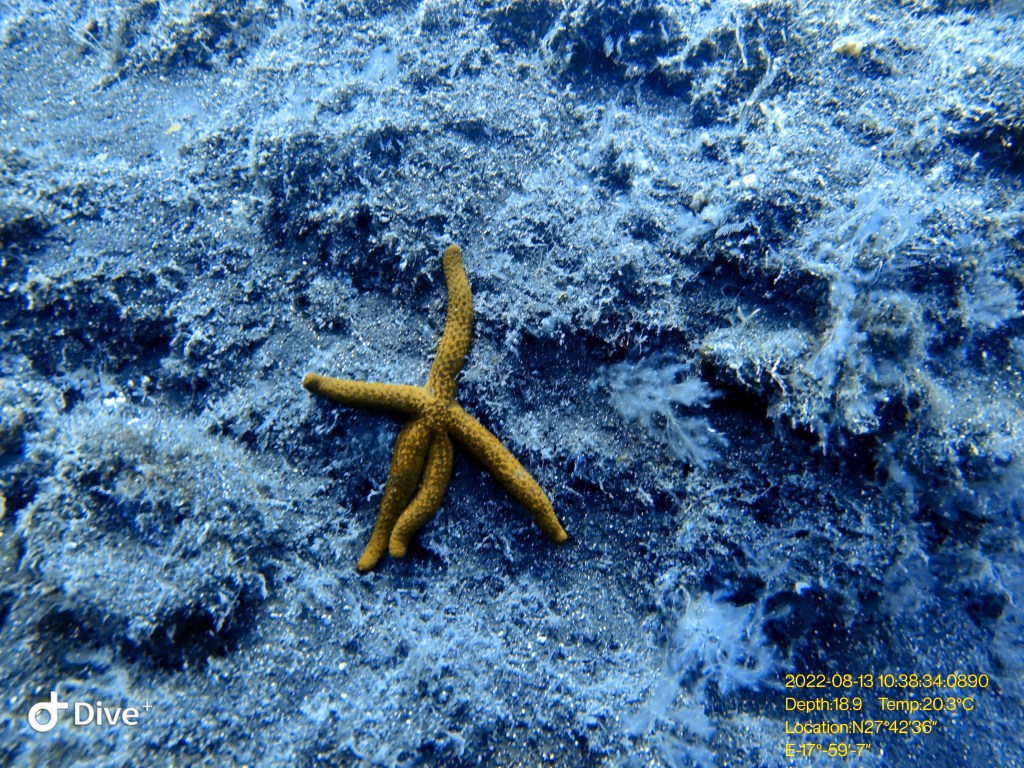
This is a starfish.
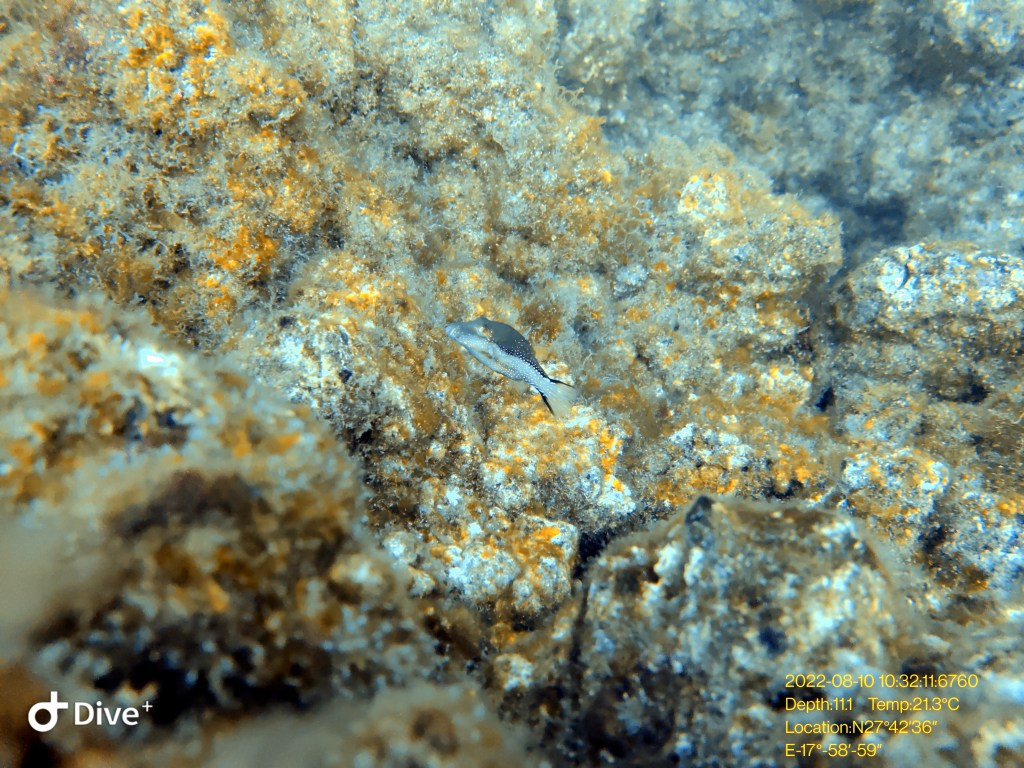
This is a little triggerfish.
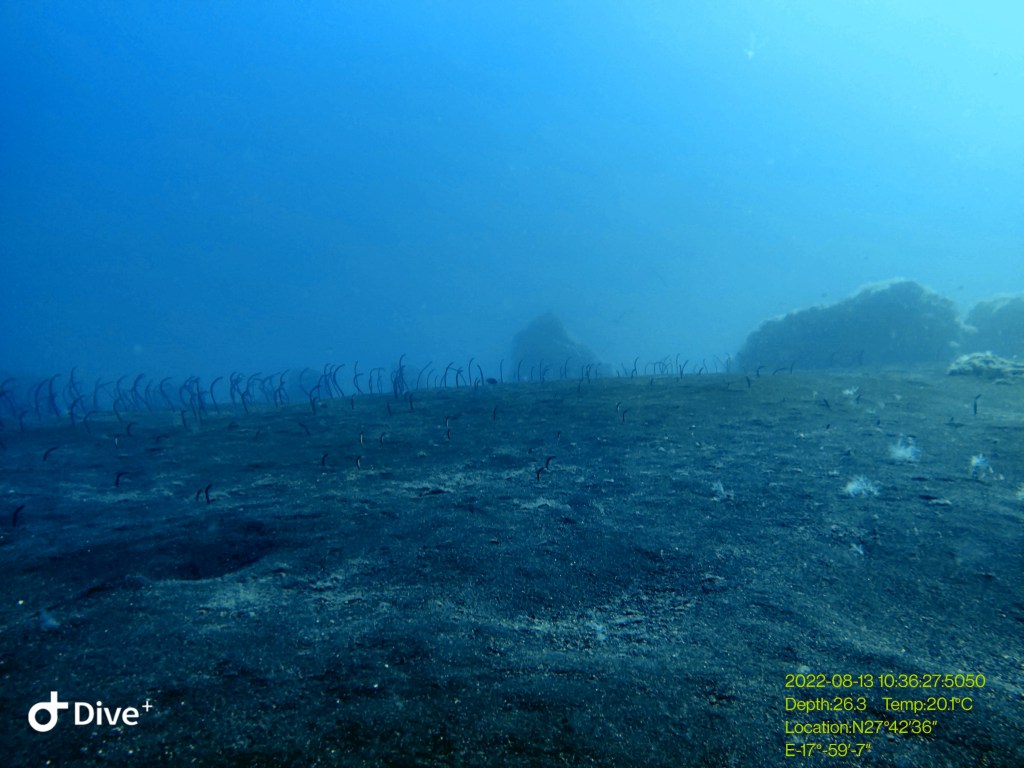
These are called garden eels. They hide in the sand when you pass by.
Thank you for reading my article till the end. The next article will arrive soon and will be about the GROUPERS of the reserve !!
 Lucas Vahlas' Blog